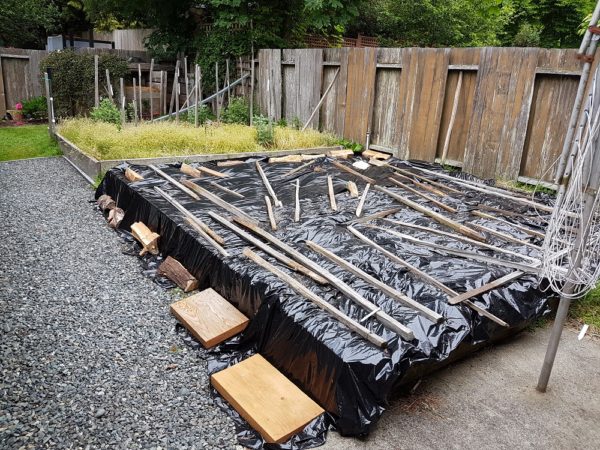
When faced with two large, overgrown raised beds that had been neglected for a while, we encountered a major weed problem. Our first approach was hand-pulling the weeds, but their rapid spread made it too exhausting to manage them this way. With summer approaching, we also had to deal with last year’s weed seeds and emerging seedlings—all while preferring a chemical-free solution. A visit to the local garden store led us to an alternative: instead of labour-intensive weeding, we could cover the beds with plastic sheets and controlling weeds by solarizing.
In our efforts to manage weed growth, we selected purpose-made black garden plastic sheets. This approach aligns with methods commonly referred to as “solarization” or “occultation.” The results were highly effective: the weeds were successfully killed, leaving the area clear and ready for further cultivation.
Weed Control Using Solarization
This weed control process involved laying the black plastic sheets over the affected garden areas. By doing so, sunlight was trapped, raising the temperature beneath the sheets and depriving the weeds of light and air. This environment proved inhospitable for weed survival.
It is important to note that the use of black plastic presents both benefits and limitations. While it serves as an effective method, it may also adversely impact beneficial insects residing beneath the sheet during solarization. This concern, however, can be mitigated in subsequent stages. Careful planning for garden restoration following weed removal is crucial to maintaining long-term soil and ecosystem health.
Covering a weedy area with black plastic sheet does kill weeds by smothering them and heating the soil. The plastic creates a physical barrier that blocks sunlight and traps solar energy. Here is a summary of the pros and cons of controlling weeds by solarizing, and the steps on how to kill weeds and their seeds with black plastic.
Black Plastic Sheet Soil Solarization Steps
This technique efficiently suppresses weeds and offers a chemical-free way to reduce soil-borne pests and diseases. It does require patience; you need to leave affected areas covered for a couple of months in summer—or for even longer—for best results.
Solarization works by trapping the sun’s heat beneath black plastic, raising soil temperatures high enough to kill unwanted weeds, pests, and bacteria. It’s especially useful for gardeners seeking an organic, chemical-free reset of their growing beds.
How It Works
- Light deprivation. Plants cannot photosynthesize without light. The black plastic blocks all sunlight, starving the weeds.
- Heat and solarization. The black plastic absorbs solar radiation, dramatically heating the soil and air underneath. This “cooks” and kills weed seeds, seedlings, and many established plants.
- The plastic prevents rainwater from reaching the soil, further stressing and dehydrating the weeds.
Step-by-Step Process
- Prepare the area. Loosening the soil with a fork, we pulled up as many weeds as possible to level the surface. Don’t worry if a few roots or short stems remain—just cut or rake off as much as you can. At minimum, mow or trample any tall weeds to lay them flat.
- Moisten the soil. Watering the area helps conduct heat better and speeds up the decomposition process.
- Lay the plastic sheets. Spread a single, continuous sheet of black UV-stabilized plastic over the entire area.
- Secure the edges. Bury the edges of the plastic in a shallow trench or weigh them down heavily with rocks, bricks, or soil to prevent wind from getting underneath.
- Wait for the process to take effect. Leave the plastic in place for at least 4-8 weeks, or longer (2+ months) for tough perennial weeds. Ideally, if weeds are persistent, six months or more delivers even better results. The process works best during hot, sunny weather.
Tips For Building Great Soil: How To Prepare Garden Beds For Planting Vegetables

Pros and Cons Using Black Plastic to Kill Weeds
While using black plastic is a highly effective, low-effort, chemical-free way to clear a large area of weeds, it does come with environmental trade-offs and requires patience.
Advantages
- Chemical-Free: No herbicides are used.
- Low Cost and Effort: Once laid, it requires no maintenance.
- Kills Some Pests and Diseases: The heat can eliminate certain soil-borne pathogens and pests.
- Warms Soil: Useful for preparing a garden bed for early planting.
- Very Effective: Kills most annual and many perennial weeds.
Disadvantages
- Uses Plastic: Not an eco-friendly, biodegradable method.
- Slow Process: Takes weeks or months to be fully effective.
- Can Harm Soil Life: The intense heat can also kill beneficial microbes and earthworms.
- Impermeable: Blocks water and air, making the soil anaerobic (oxygen-deprived) underneath.
- Unsightly: A large sheet of black plastic is not visually appealing.
Our Challenge: Strong Gusts Of Wind
In the Pacific Northwest coast, windy conditions posed a problem—our initial setup with wood blocks and sticks didn’t keep the plastic from blowing into neighboring yards. Eventually, we secured the sheet edges with a staple gun for a tighter seal, which worked much better.
The Other Challenge: Our Dog
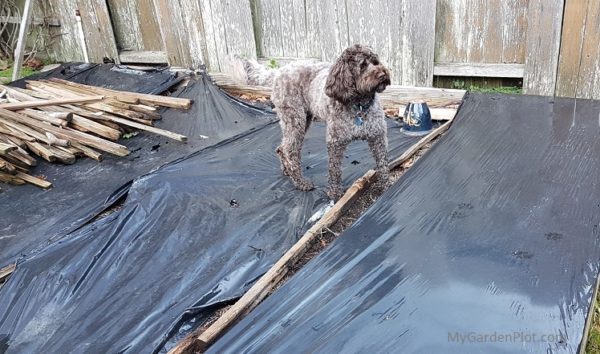
Lesson of the day: playful puppies and garden beds don’t mix! Our dog, apparently auditioning for “Extreme Makeover: Backyard Edition,” managed to put a few enthusiastic holes in the plastic sheets. Despite her best efforts to create a dog-approved multipurpose zone, our solarizing weed killer project soldiered on—provided we kept our furry assistant out of the landscaping business.
Our Takeaway
Soil solarization was an effective, chemical-free method for killing the dense weed growth in our the large garden beds. By covering loosened soil with black plastic sheets during hot weather, we were able to trap the sun’s heat, raising soil temperatures to kill weeds.
The plastic should remain in place for at least two months during hot weather—longer for stubborn weeds, seeds, pests, and soil-borne diseases. For best results, till the soil before covering and ensure the area stays warm and dry. While the process can impact beneficial insects, garden health MUST be restored after solarization.