Can We Prune Our Mature Tree Peony?
A tree peony (Paeonia) can be pruned though most don’t need too much pruning to be done annually. Unless it has been neglected for a while. This deciduous shrub can also be trained against a wall, much like ours is, to feature its beautiful large flowers and shelter it from strong winds. Follow below on how to prune a tree peony and tips on winter pruning and reshaping. And the special steps taken in training and pruning our tree peony.
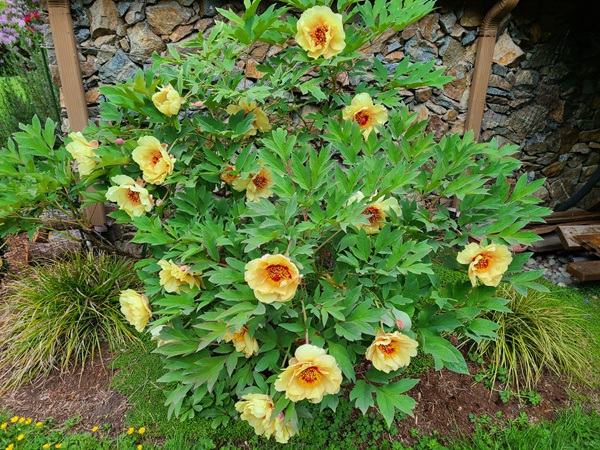
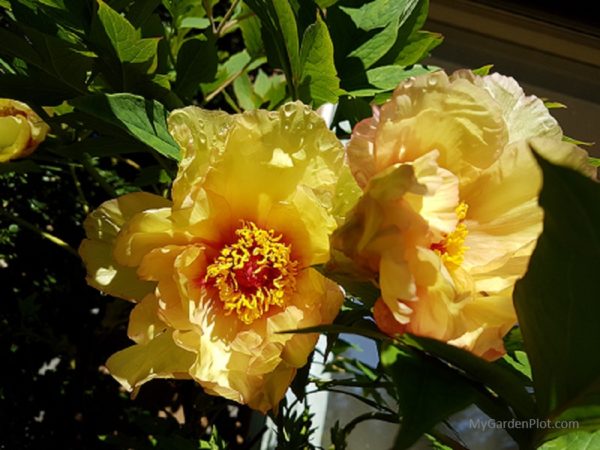
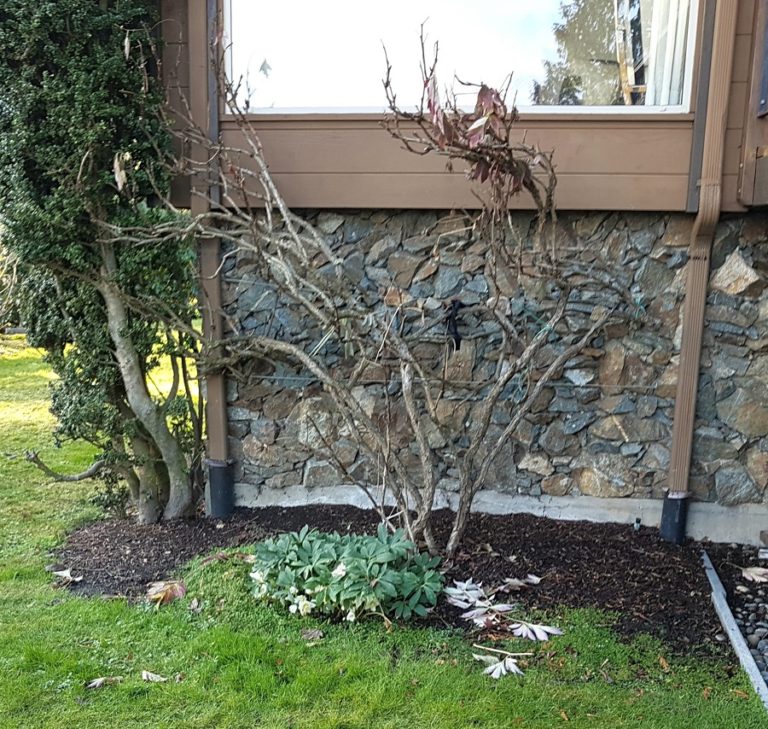
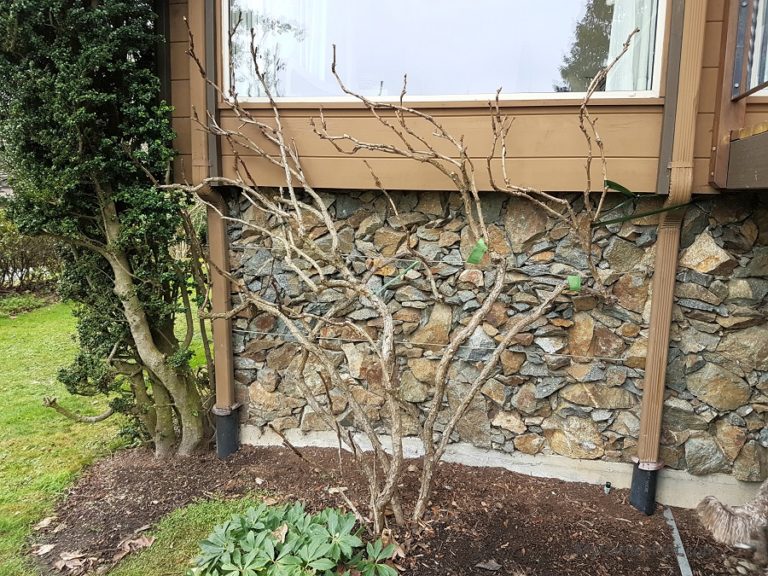
Every spring, we enjoy a plethora of stunning large blossoms from our tree peony. It is over 5 feet tall and just as wide. It faces east in a sheltered, sunny location, and reaches just above the window sill to be enjoyed from inside the house. However, our beautiful tree peony was in desperate need of winter pruning and a little extra maintenance to get it back into shape before the next flowering season. The goal was to improve the form by removing some of the congested growth and overcrowding, reshaping to encourage a more open, vase-shaped habit, and redoing the support ties. Also to keep some height for viewing from inside.
The 3 Key Reasons to Prune a Tree Peony
- To Remove Dead Wood: This is the #1 reason for pruning. It keeps the plant healthy and looking tidy.
- To Rejuvenate an Old Plant: Encourage new, vigorous stems from the base.
- To Improve Shape and Airflow: Remove weak, crossing, or misplaced branches.
When to Prune Tree Peonies
The Best Time: The ideal window is in early spring, just as the buds begin to swell. This is typically in late March or April, depending on your climate.
Why Early Spring?
- You can easily identify which branches are alive (with plump, swelling buds) and which are dead (no buds, or buds that are shriveled and dry).
- The plant’s energy is about to be directed into new growth, so it will heal quickly.
- You avoid accidentally cutting off the large, beautiful flower buds that form on the old wood.
Avoid Pruning in Fall: Pruning in autumn can stimulate new, tender growth that will be killed by winter frost.
How To Prune A Tree Peony
Generally, tree peonies need very little pruning and are considered low maintenance. Unlike herbaceous or bush peonies, tree peonies are not cut back to the ground. However, light annual pruning helps keep a tidy habit and a healthy plant.
In summer or fall, well after the flowers have gone, trim any remaining faded flowers, if not already done. The tree peony will lose its leaves and go dormant by late autumn. Leave any dead shoots to be pruned just before spring.
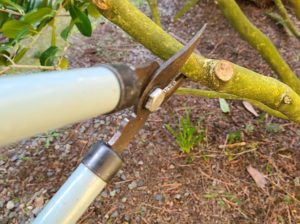
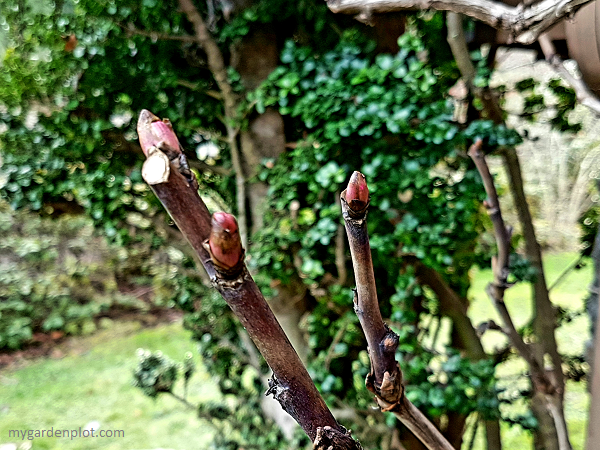
At the end of winter or early spring, begin by removing any deadwood pieces. It is not uncommon for a stem to die off even though it was full of leaves and flowers the year before. This is normal with tree peonies, and there is nothing to worry about. Just prune the deadwood above any new buds. There will likely be a few buds that are dead. Where you find a dead bud, follow down the stem to a live bud and trim, cutting at a slant, about 1/2 cm above the live bud (see photo example below).
To limit the height of your tree peony, prune about half of last season’s growth on the tallest stems. Cut above a healthy bud of an outward-facing side stem.
Look at all the stems and repeat where needed. When completed, the effect will be a more open plant with good air circulation and new live buds at the end of the stems. Apply this low maintenance pruning every year, and you will not need to do the hard pruning that we needed to apply to our mature tree peony.
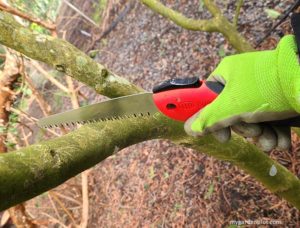
You need a pair of clean, sharp pruners. And remember to always sterilize them by rubbing the blades with ethanol or isopropyl alcohol between uses to prevent disease from spreading from one plant to another.
Step-by-Step Pruning Summary
Follow these steps each spring.
Step 1: Sanitize Your Tools
Use clean, sharp bypass pruners or loppers. Wipe the blades with rubbing alcohol to prevent the spread of disease.
Step 2: Remove the “Three D’s”
Start by removing any wood that is:
Dead: This is your first priority. Cut it back to the base of the plant or to a healthy, outward-facing live bud.
Diseased: If a branch is cankered or looks sickly, remove it completely.
Damaged: Any branches that are broken or weak.
Step 3: Address the Suckers
Tree peonies are sometimes grafted onto a herbaceous peony rootstock. Sometimes, the rootstock sends up its own shoots, called suckers.
- How to Identify a Sucker: Suckers emerge from below the graft union (the swollen, knobby area at the base of the plant). They often have different, finer leaflet shapes and a redder stem than the tree peony.
- What to Do: Trace the sucker down to its point of origin and pull it away or cut it off as low as possible. If you just cut it at soil level, it will grow back with a vengeance. If left, the sucker will overtake and kill the grafted tree peony.
Step 4: Structural & Rejuvenation Pruning (Optional)
After dealing with the essentials, you can do some light shaping.
- Thin for Airflow: If the center is very crowded, remove one or two of the oldest, thickest stems right down to the base. This encourages light and air into the center of the plant, reducing the risk of fungal disease, and stimulates new, strong shoots from the base.
- Shorten Leggy Stems: To control the overall height or encourage bushiness, you can cut a long stem back by one-third to one-half, making the cut just above a healthy, outward-facing bud.
- Remove Seed Heads: After flowering, you can deadhead by cutting the spent flower back to a strong set of leaves. Do not cut the woody stem back heavily, as this is where next year’s flower buds will form.
The golden rule for tree peonies is: “Less is more.” They require minimal pruning compared to most other shrubs.
Pruning an Old, Neglected Tree Peony
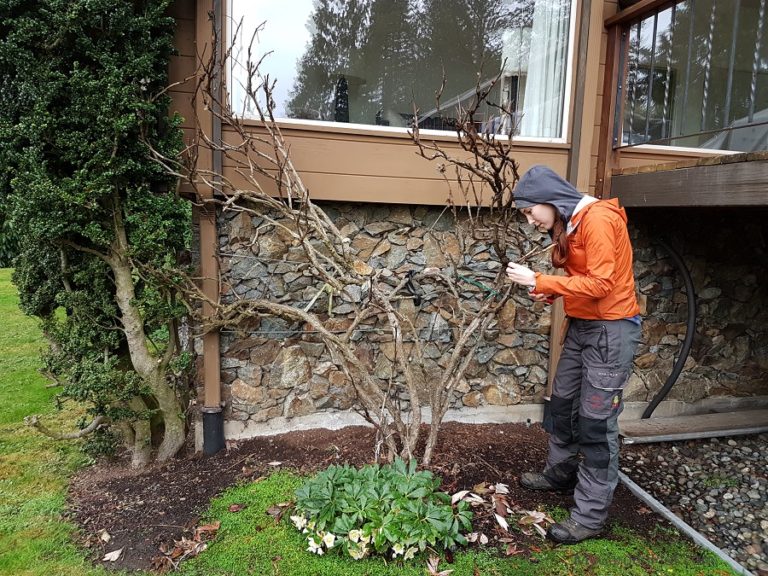
My first time pruning a mature neglected tree peony, I wrestled with whether I would prune it myself or get professional help – I must admit I was very nervous I would get it wrong and damage the plant. Not wanting to prune it incorrectly and ensuring the right methods were applied, I reached out to our local pro Sarah for help – and to learn from. A great job was done – removed deadwood, thinned out old wood and crowded sections, and brought back its grandeur shape. A little more pruning the following year, and we will finally have the right form completed, and annual maintenance on the tree peony will be less.
If your tree peony has become a tangled, leggy mess, yes, you can perform a more drastic rejuvenation prune.
- Timing: Early spring.
- Method: Over two to three years, cut about one-third of the oldest, thickest stems right down to the ground each year. This gradual approach is less stressful for the plant than cutting everything back at once. It will stimulate new growth from the base, resulting in a fuller, more vigorous plant.
Tree Peonies Respond Well To Pruning!
With confidence, the tree peony now sits well to regain its prominence in the garden and give us another season of beautiful flowers. I am now ready to take on those pruning shears myself – though, as we said, tree peonies generally require minimal pruning once shaped well. Tree peonies respond well to pruning, so don’t be scared. If your large tree peony is looking a little shaggy, plan your pruning and reshaping with confidence!
Quick Guide Summary
- Annual Cleanup: Early Spring. Remove dead, diseased, and damaged wood.
- Sucker Removal: As soon as you see them. Trim off below the soil line.
- Deadheading: After flowers fade. Cut back to a strong leaf axil.
- Rejuvenation: Early Spring (over 2-3 yrs). Cut 1/3 of the oldest stems to the ground each year.
By following these simple steps, your tree peony will maintain a strong, healthy structure and reward you with spectacular blooms for decades to come.
What NOT to Do
- DON’T “Give it a haircut.” Never shear the top of a tree peony. You will ruin its natural form and cut off all the flower buds.
- DON’T Prune hard every year. Tree peonies are slow growers. A major hard prune should only be done to revitalize a very old, neglected plant.
- DON’T Prune in the fall.
Tree Peony Pruning: Our Takeaway
Pruning a tree peony (a woody shrub, Paeonia suffruticosa) is very different from pruning a herbaceous peony. The goal is to maintain its beautiful, permanent shrub-like structure while encouraging vigorous blooms.
Mature tree peonies require minimal annual pruning, mainly to maintain shape and health. Pruning is best done in early spring by removing deadwood and faded flowers, and thinning congested growth to encourage an open, vase-shaped habit. Unlike herbaceous peonies, tree peonies are not cut back to the ground. Regular light pruning helps avoid the need for drastic measures, while neglected plants may benefit from professional help to restore their shape. Tree peonies respond well to pruning, and with proper maintenance, will continue to produce beautiful blooms season after season.